





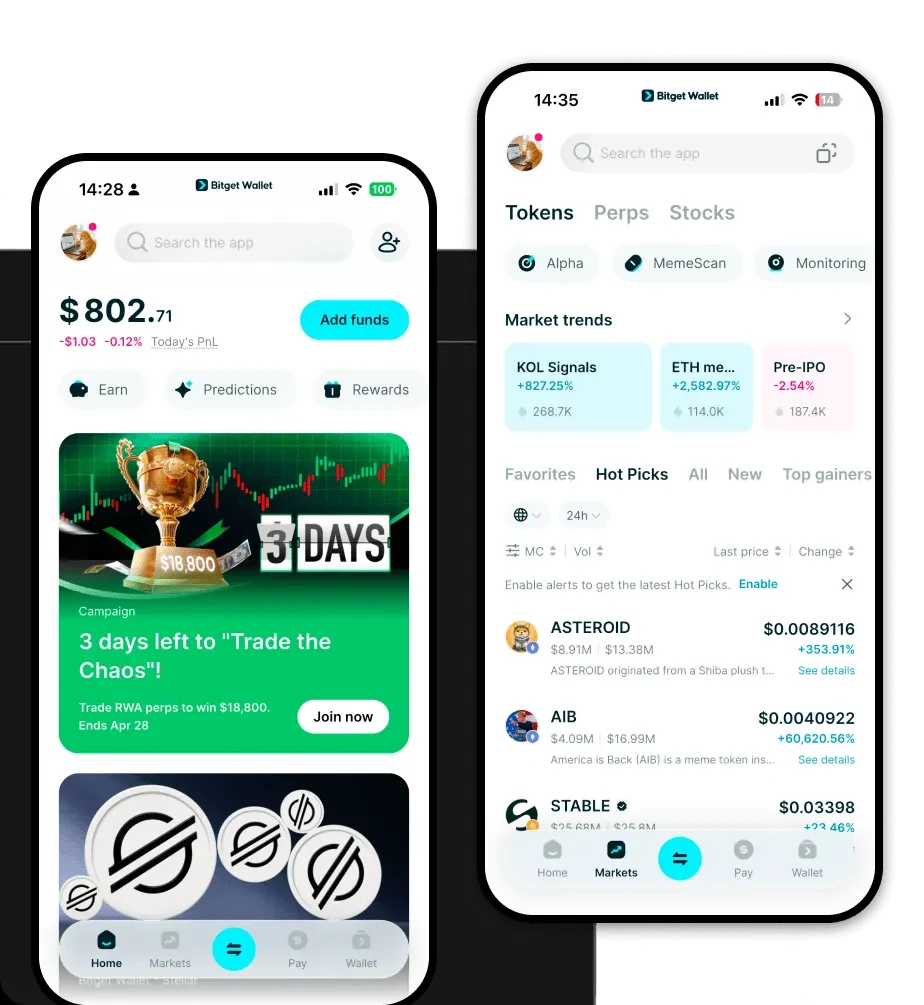
What is a deploy Wallet?
A deploy wallet is a specialized digital interface designed to manage your deploy assets within the EVM ecosystem. As deploy operates on an EVM-compatible blockchain, your wallet serves as the gateway to the broader Ethereum Virtual Machine environment, allowing you to interact with decentralized applications, manage your tokens, and execute on-chain commands. Are you looking for a reliable and secure crypto wallet for your deploy? Bitget Wallet will be your best choice. Trusted by 40 million users, you can freely explore Web3 on Bitget Wallet. Start your journey now!
Download Bitget deploy Wallet
Getting started with your deploy assets requires a reliable portal that prioritizes both security and accessibility. Bitget Wallet offers a comprehensive solution that supports 130+ mainstream blockchains and millions of tokens, ensuring that your deploy holdings are always accessible alongside your entire portfolio. Whether you are managing assets on the go or conducting complex on-chain operations, Bitget Wallet provides a unified experience across iOS, Android, and browser extensions.
The platform emphasizes complete user sovereignty through private key self-custody, giving you full control over your digital assets. You can easily download Bitget Wallet to experience a seamless multi-chain interface that simplifies asset management. By aggregating hundreds of DEXs and cross-chain bridges, Bitget Wallet ensures you can move and trade your deploy tokens with maximum efficiency, without compromising on security.
Why Choose Bitget deploy Wallet?
Choosing the right infrastructure for your EVM-based activities is critical. Bitget Wallet is engineered to meet the demands of advanced users and developers alike. Here is why it stands out as the best wallet for deploy:
- EVM Compatibility: As a native EVM-compatible wallet, Bitget ensures seamless interaction with decentralized applications, allowing you to deploy smart contracts and interact with protocols without compatibility hurdles.
- Advanced Developer Tooling: Unlike standard wallets, Bitget provides integrated infrastructure that supports complex on-chain operations, making it an essential utility for those working in the infrastructure space.
- Gas Fee Optimization: Leveraging smart algorithms, the wallet helps you navigate EVM gas fluctuations, ensuring your transactions are processed efficiently while minimizing unnecessary costs.
- Robust Security Architecture: With a $300 million user protection fund, Bitget Wallet adds an extra layer of defense for your on-chain infrastructure activities, providing peace of mind as you build and test.
How to Create a deploy Wallet
Setting up your wallet is a straightforward process designed to get you connected to the blockchain quickly:
1. Download and Install: Visit the official website or your app store to download Bitget Wallet on your preferred device.
2. Create New Wallet: Open the app and select 'Create Wallet.' You will be prompted to set a strong password to protect your local app access.
3. Backup Seed Phrase: The app will generate a 12 or 24-word recovery phrase. Write this down on physical paper and store it securely; this is the master key to your deploy wallet address.
4. Verify Phrase: Confirm the recovery phrase by entering the words in the correct order to ensure you have backed it up correctly.
5. Import or Add deploy: Once your wallet is active, use the 'Manage Tokens' feature to add deploy to your dashboard, ensuring it is visible and ready for your on-chain activities.
What Can You Do With a deploy Wallet?
A deploy wallet is more than just a storage solution; it is a powerful tool for engaging with the EVM ecosystem. Key use cases include:
- Deploying Smart Contracts: Utilize the wallet’s robust infrastructure to push your code directly to the mainnet or testnets, streamlining your development workflow.
- dApp Development: Connect your wallet to various development environments to test front-end integrations and backend smart contract logic in real-time.
- Protocol Testing: Engage with new DeFi protocols and infrastructure projects to verify their functionality and security parameters before committing significant capital.
- Network Integration: Seamlessly switch between different EVM-compatible networks to ensure your infrastructure solutions are compatible across various chain environments.
How deploy Wallets Are Different from Other Crypto Wallets
When handling deploy tokens, the underlying architecture matters. Unlike UTXO-based chains (like Bitcoin), EVM-based wallets like Bitget use an 'Account Model.' This means your wallet tracks a balance associated with a specific address, which is essential for managing the complex state changes required by smart contracts. Furthermore, while some wallets struggle with the resource-heavy nature of smart contract deployment, Bitget Wallet is optimized for gas efficiency and rapid transaction signing. This difference is crucial for developers who need to iterate quickly on-chain without being bogged down by slow confirmation times or inefficient fee estimations found in less specialized wallets.
