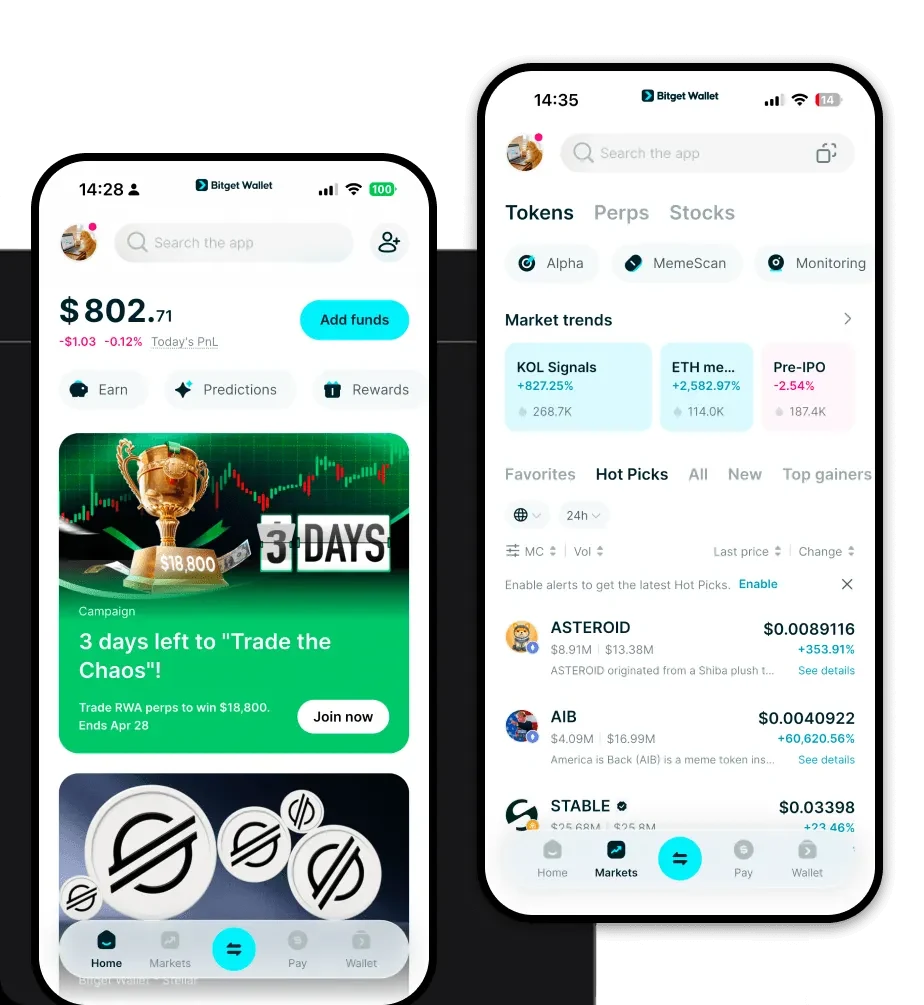
What is a USDU Wallet? USDU represents a pivotal asset in the current DeFi landscape. As an EVM-compatible stablecoin, it is designed to maintain a 1:1 peg with the US Dollar, providing a reliable and secure asset for DeFi and Web3 ecosystems. It is often supported by mainstream crypto wallets like Bitget Wallet, allowing users to safely store, transfer, and explore decentralized finance applications. Because it operates on the EVM (Ethereum Virtual Machine) standard, it integrates seamlessly with a vast array of decentralized exchanges and lending protocols, making it a cornerstone for users looking to maintain stability within their crypto portfolios. Download Bitget USDU Wallet To begin your journey, you need a robust interface that prioritizes both security and usability. The best wallet for USDU is one that provides full control over your assets through self-custody. You should 'download Bitget Wallet' to ensure you have a non-custodial solution that puts you in charge of your own private keys. Whether you are using an iOS device, an Android smartphone, or a desktop browser extension, Bitget offers a unified experience. This USDU wallet app supports over 130+ blockchains, ensuring that your stablecoin management is never siloed and remains accessible across various network ecosystems. Why Choose Bitget USDU Wallet? - Seamless EVM Compatibility: Since USDU is an EVM token, Bitget Wallet provides native support for complex smart contract interactions, ensuring you can approve tokens and execute trades without compatibility errors. - Advanced Security Protocols: With a $300M+ user protection fund, Bitget Wallet ensures your stablecoin holdings are shielded from common vulnerabilities, providing peace of mind for your assets. - Efficient Gas Management: The wallet features smart gas fee estimation, which is critical when transacting with stablecoins like USDU, helping you avoid overpaying during periods of network congestion. - Comprehensive DApp Browser: Access the entire DeFi ecosystem directly from your USDU wallet app, allowing for one-click connections to yield farms, liquidity pools, and decentralized lending platforms. How to Create a USDU Wallet 1. Download and Install: Visit the official website to 'download Bitget Wallet' for your preferred device. 2. Create or Import: Launch the app and select 'Create Wallet' to generate a new, secure set of private keys. 3. Secure Your Seed Phrase: Write down your recovery phrase and store it in a safe, offline location; never share this with anyone. 4. Add USDU: Navigate to the token list, search for USDU, and toggle it on to make it visible in your main dashboard. 5. Receive Funds: Click on 'Receive' to display your unique USDU wallet address, which you can share with others to receive assets securely. What Can You Do With a USDU Wallet? - Trading: You can swap USDU for other tokens across hundreds of integrated DEXs directly within the wallet interface. - Providing Liquidity: Use your USDU to contribute to liquidity pools on decentralized exchanges, earning transaction fees from other traders who swap against your assets. - Yield Farming: Deposit your USDU into various decentralized protocols to earn interest or governance tokens, maximizing your capital efficiency in the DeFi space. - Payments: Utilize the stability of USDU to send cross-border payments or settle transactions in Web3 commerce without the price volatility associated with other crypto assets. - Hedging against volatility: During market downturns, you can convert your volatile assets into USDU to preserve your portfolio value and stabilize your holdings. How USDU Wallets Are Different from Other Crypto Wallets Unlike wallets designed for UTXO-based chains like Bitcoin, a USDU wallet built for the EVM ecosystem focuses on account state and smart contract capability. While Bitcoin wallets manage unspent transaction outputs, your USDU wallet manages an account balance stored within a contract. This allows for complex interactions, such as approving third-party protocols to access your funds without giving them full control over your wallet. Furthermore, because USDU lives on the EVM, the wallet must manage 'Gas'—the fee paid to the network—which is a distinct mechanism compared to the transaction fee models found in non-EVM chains. This requires a wallet that can accurately estimate and execute these fee-based transactions efficiently.